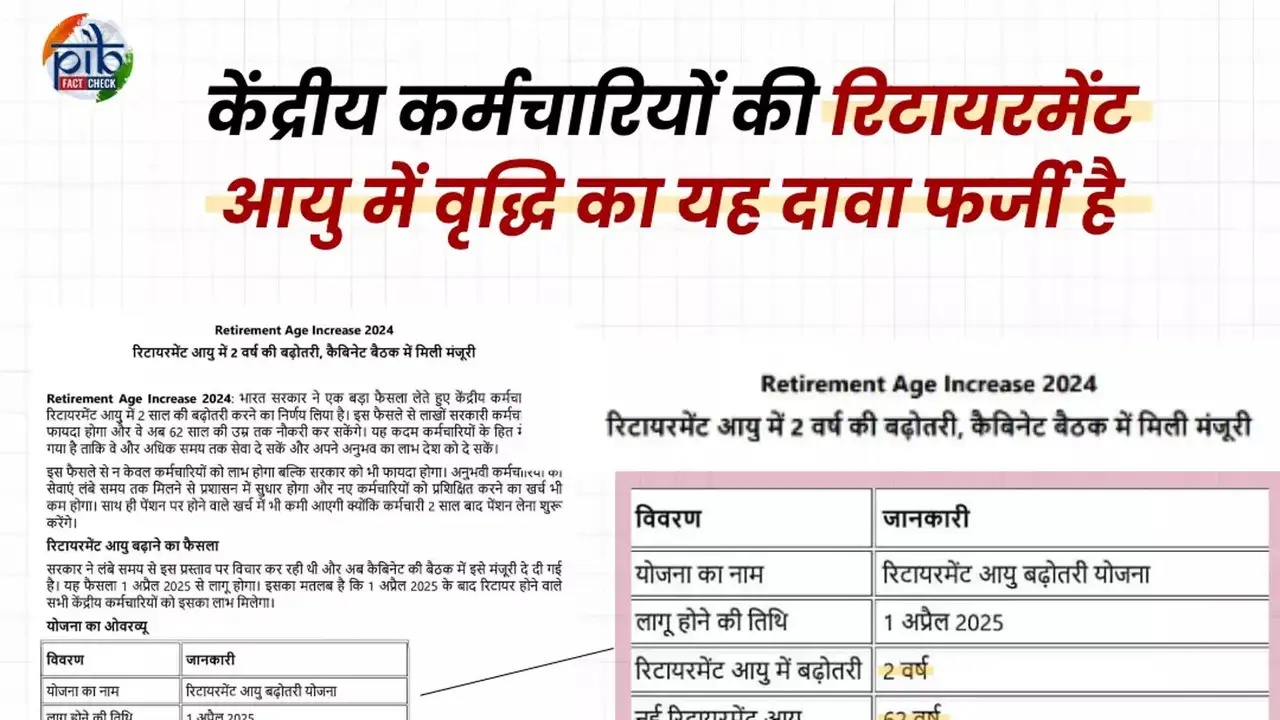
Government Clarifies No Retirement Age Change
India’s Press Information Bureau (PIB) has officially refuted a viral claim circulating on social media platforms regarding an impending increase in the retirement age for central government employees. The fabricated message, which suggested raising the retirement age from 60 to 62, was swiftly debunked by the government’s official fact-checking agency. PIB clarified that no such decision has been made by the Government of India, emphasizing that the claim is entirely false. This clarification underscores the importance of relying on verified sources for critical policy updates, as misinformation can easily mislead the public. The PIB’s prompt response highlights its role in maintaining transparency and preventing the spread of false information, particularly in matters affecting government employees and public trust.
The Viral Post: A Detailed Analysis
The viral post, which gained traction on platforms like X (formerly Twitter), presented a notice titled “Retirement Age Increase 2024,” claiming that a cabinet meeting had approved the policy change. According to the message, the adjustment would take effect from April 1, 2025, allowing employees to work until 62. The post outlined several supposed benefits, including aligning with rising life expectancy, retaining experienced staff, reducing pension costs, and ensuring administrative continuity. While these arguments appeared logical, they were based on unverified data and assumptions. The PIB’s rebuttal emphasized that the government has not approved any such proposal, making the entire notice a deliberate misinformation campaign. This incident exemplifies how well-crafted fake news can exploit public concern over policy changes, even when the claims lack factual basis.
Why Misinformation Spreads and Its Impact
The rapid spread of the viral post underscores the challenges of combating misinformation in the digital age. Social media platforms enable such claims to reach millions quickly, often before official clarifications can be disseminated. The post’s detailed reasoning and seemingly credible data made it persuasive to many, despite its lack of authenticity. This highlights the need for critical thinking and verification before sharing information, especially regarding government policies. The PIB’s clarification serves as a reminder that official channels are the most reliable sources for policy updates. Misinformation of this nature can cause unnecessary confusion among employees and the public, eroding trust in institutional communication. It also risks distorting public understanding of critical issues like pension reforms and workforce management.
Steps to Verify Government Announcements
To avoid falling victim to misinformation, individuals are advised to consult credible sources such as the Press Information Bureau (PIB) or official government websites for accurate policy updates. The PIB regularly issues clarifications and fact-checks to counteract false claims, ensuring the public receives reliable information. For instance, the PIB’s official website and verified social media accounts provide timely updates on government decisions. Additionally, reputable news outlets that adhere to journalistic standards can offer balanced coverage of policy changes. The incident involving the retirement age rumor illustrates the importance of cross-referencing information with multiple trusted sources. By prioritizing official communications, citizens can safeguard against misinformation and stay informed about genuine developments affecting their lives.
Conclusion: The Need for Vigilance
The debunking of the retirement age rumor serves as a critical lesson in the importance of verifying information, particularly when it pertains to government policies. The PIB’s swift action to counter the false claim highlights the role of institutional transparency in combating misinformation. As social media continues to shape public discourse, individuals must remain vigilant and adopt a skeptical approach to unverified claims. The incident also underscores the need for improved digital literacy and access to reliable information sources. By fostering a culture of critical evaluation, society can mitigate the risks of misinformation and ensure that policy discussions are grounded in factual accuracy. The government’s commitment to transparency, as demonstrated by the PIB, remains essential in maintaining public trust and preventing the spread of false narratives.


About the Author