Government Employees’ Financial Relief Approved by Union Cabinet
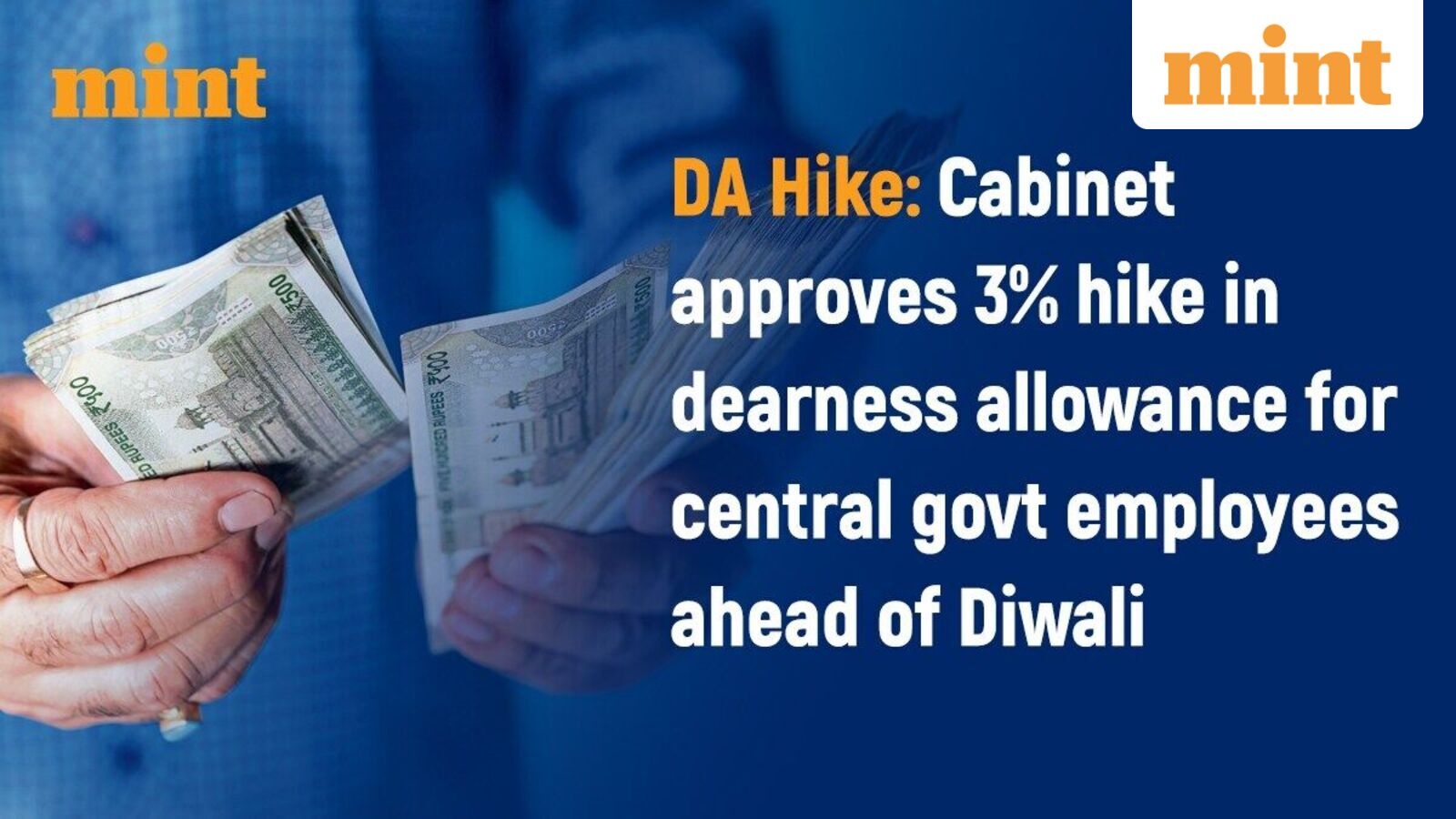
The Union Cabinet, under the leadership of Prime Minister Narendra Modi, has finalized a significant financial adjustment for central government employees and pensioners. Effective from July 1, 2025, a 3% increase in the Dearness Allowance (DA) will be implemented, bringing the rate to 58% of basic pay and pensions. This decision, announced on October 1, 2025, aims to offset rising inflation and ensure employees can maintain their standard of living amid economic pressures. The move coincides with the Diwali festive season, a tradition of announcing salary adjustments to support public sector workers during this period. The Cabinet emphasized that the hike is based on recommendations from the 7th Central Pay Commission, reflecting a structured approach to addressing cost-of-living challenges.
Economic Implications of the DA Hike
The proposed DA increase will have a substantial financial impact on the government’s budget, with an estimated annual cost of ₹10,084 crore. This allocation will benefit approximately 49.19 lakh central government employees and 68.72 lakh pensioners, ensuring broader coverage for both active and retired personnel. The decision follows a similar 3% DA adjustment approved in October 2024, highlighting a pattern of regular updates to align with inflationary trends. The government has consistently used Diwali and Holi as key windows for such announcements, balancing administrative efficiency with public expectations. Analysts note that this approach helps stabilize household budgets while maintaining fiscal discipline.
Structure of Government Employee Salaries
Understanding the composition of government salaries provides context for the DA’s role in employee compensation. Basic pay forms the largest portion at 51.5%, followed by DA at 30.9%, House Rent Allowance (HRA) at 15.4%, and a minimal 2.2% for transport allowances. The DA, a critical component for mitigating inflationary effects, is recalibrated quarterly based on the cost-of-living index. This systematic adjustment ensures that employees’ purchasing power remains aligned with economic realities. The recent hike underscores the government’s commitment to maintaining equitable compensation structures while managing public finances responsibly.
Historical Context and Policy Continuity
Recent DA adjustments reveal a strategic pattern in government policy. The 2024 and 2025 hikes, both at 3%, reflect a measured approach to inflation management rather than abrupt increases. This consistency addresses employee concerns about financial stability while avoiding excessive fiscal strain. The policy also extends to pensioners through Dearness Relief (DR), ensuring that retired personnel receive proportional benefits. Such measures are part of broader efforts to retain skilled workforce and maintain public sector morale. The government’s proactive stance on regular salary revisions demonstrates its focus on long-term economic planning and social welfare.
Broader Impact on Public Sector Dynamics
The DA hike is part of a larger framework for managing public sector compensation. By aligning allowances with inflation, the government aims to balance employee satisfaction with fiscal responsibility. This approach not only supports current employees but also ensures the sustainability of pension systems. The decision to implement the increase ahead of Diwali underscores the importance of timing in public policy, as it coincides with a period of heightened consumer spending. Overall, the adjustment reflects a nuanced strategy to address economic challenges while maintaining institutional stability and public trust.


About the Author