Anticipated Salary Reforms for Central Government Employees
The Indian government is set to initiate a transformative review of salaries and benefits for central government employees through the upcoming 8th Pay Commission. This development has sparked widespread anticipation among millions of public sector workers and pensioners, who are hopeful for significant financial improvements. The commission’s recommendations, expected to be finalized by early 2026, could redefine income structures across various sectors, including defense, judiciary, and administrative services. While the exact details remain under deliberation, experts suggest that the proposed reforms may address long-standing concerns about stagnant wages and inflationary pressures. The potential adjustments to the Fitment Factor, a key component of the pay structure, could lead to substantial increases in basic salaries and pensions, potentially lifting millions out of financial strain. As the government prepares for the next phase of this critical review, stakeholders are closely monitoring developments to gauge the impact on their livelihoods.
Structure and Historical Context of Pay Commissions
Pay Commissions have been instrumental in shaping India’s public sector compensation framework since their inception in 1965. These expert panels, appointed by the government every decade, conduct comprehensive reviews of salary structures, allowances, and pension schemes to ensure they remain aligned with economic realities. The Seventh Pay Commission, which concluded its tenure in 2026, introduced reforms that enhanced the basic pay scale for over 4.4 million central government employees. The 8th Pay Commission, now in the planning stage, is expected to build upon these foundations by addressing emerging challenges such as rising living costs and the need for modernized benefits. While the exact timeline for implementation remains unclear, officials have indicated that the new recommendations will take effect from January 1, 2026, following a period of stakeholder consultations. This structured approach ensures that any changes are both equitable and sustainable for the vast public workforce.
Projected Impact on Salaries and Benefits
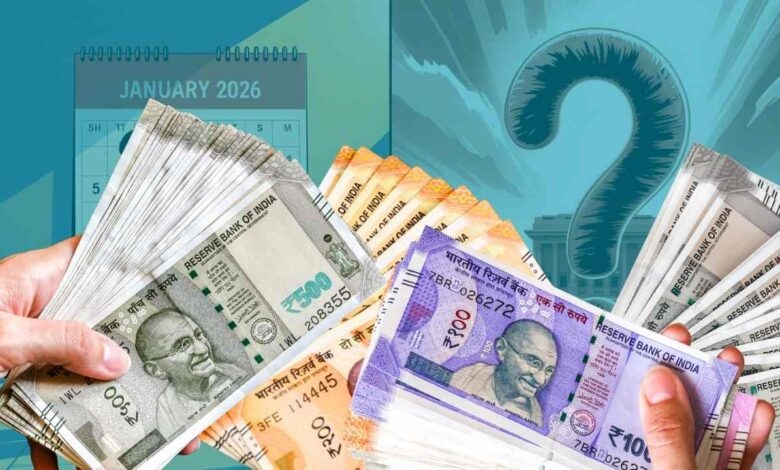
The anticipated reforms under the 8th Pay Commission are projected to deliver substantial financial relief to central government employees. A key focus of the commission’s deliberations is the adjustment of the Fitment Factor, which currently stands at 2.57 under the Seventh Pay Commission. If raised to 2.86, this change could elevate the minimum basic salary from ₹18,000 to ₹51,480, marking a significant leap in purchasing power. Additionally, the commission is expected to revise House Rent Allowance (HRA) and Travel Allowance (TA) to better reflect current cost-of-living indices. Pensioners, who have historically received smaller increments, may also benefit from revised pension scales, with minimum pensions potentially rising from ₹9,000 to ₹25,740. These adjustments aim to create a more balanced and fair compensation framework, ensuring that all levels of the public sector workforce are adequately supported.
Implementation Timeline and Stakeholder Engagement
The government has emphasized a transparent and inclusive process for implementing the 8th Pay Commission’s recommendations. Officials have already begun gathering feedback from various stakeholders, including trade unions, financial institutions, and employee representatives, to ensure the proposed changes are both feasible and equitable. While the final implementation date is yet to be confirmed, preliminary indications suggest that the revised pay structure will take effect from January 1, 2026, aligning with the conclusion of the Seventh Pay Commission’s mandate. This timeline allows for adequate preparation and communication to all affected employees. The government has also hinted that the process may gain momentum following the Lok Sabha elections, ensuring a smooth transition for the millions of workers and pensioners who stand to benefit from these reforms.
Scope of Affected Groups and Future Outlook
The 8th Pay Commission’s recommendations are expected to impact a wide range of central government employees, including defense personnel, All India Services, Supreme Court staff, and Gramin Dak Sevaks. However, the inclusion of Public Sector Undertakings (PSUs) and autonomous bodies remains under review, with no definitive decision yet announced. This broad scope underscores the commission’s commitment to addressing the diverse needs of the public sector workforce. As the government finalizes its plans, the focus will remain on ensuring that the proposed reforms are both comprehensive and sustainable. For millions of employees and pensioners, the outcome of these deliberations could represent a turning point in their financial stability and overall quality of life.


About the Author